

RTD, thermocouple, thermistor, IC sensor advantages and disadvantages of comparison
Choosing a temperature sensing product may seem like a trivial matter, but because of the variety
of products available, this task can be daunting. In this article, I will describe four types of
temperature sensors (resistive temperature detectors (RTDs), thermocouples, thermistors, and
integrated circuit (IC) sensors with digital and analog interfaces) and discuss each Advantages
and Disadvantages of Sensors.
From a system-level standpoint, the temperature sensor is suitable for your application will
depend on the required temperature range, accuracy, linearity, solution cost, function, power,
solution size, mounting method (surface mount Method and through-hole plug-in method and circuit
board installation method) is also necessary to support the circuit easy to design.
RTD
While measuring the resistance of the RTD while changing its temperature, the response is almost
linear, behaving like a resistor. As shown in Figure 1, the resistance curve of the RTD is not
fully linear, but has a few degrees of deviation (a straight line is shown for reference) - but
highly predictable and retestable. To compensate for this slight non-linearity, most designers
digitize the measured resistance value and use the look-up table in the microcontroller to apply
the correction factor. The repeatability and stability in this wide temperature range (about
-250 ° C to + 750 ° C) makes the RTD extremely useful in high-precision applications, including
the measurement of liquid or gas temperatures in pipes and large vessels.
The complexity of the circuitry used to process the RTD analog signal varies substantially depending on the application. Amplifiers and analog-to-digital converters (ADCs), which produce their own errors, are indispensable. Power is supplied to the sensor only when the measurement is necessary - this way you can also achieve low power operation, but this makes the circuit much more complex. Moreover, the power required to power the sensor will also increase its internal temperature, thus affecting the measurement accuracy. This self-heating effect produces a temperature error (which is correctable but requires further consideration) due to only a few milliamperes of current. Also, keep in mind that wire-wound platinum RTDs or thin-film RTDs can be quite costly, especially when compared to the cost of IC sensors.
Thermistor
Thermistors are another type of resistive sensor. There are a variety of available thermistor, from
inexpensive products to high-precision products, and so forth. Low-cost, low-precision thermistors
perform simple measurements or threshold detection - these resistors require multiple components
(such as comparators, reference and discrete resistors), but are very inexpensive and have
non-reactive Linear resistance-temperature properties, as shown in Figure 2. If you need to
measure a wide range of temperatures, you will need to do a lot of linearization work. It may be
necessary to calibrate several temperature points. To achieve higher accuracy, more expensive and
more thermally tolerable thermistor arrays can be used to help solve this nonlinear problem, but
such arrays are generally less sensitive than a single thermistor.
Because multi-trip point systems add complexity and cost, low-cost thermistors are typically used
only for applications with minimal functional requirements, including toasters, coffee makers,
refrigerators, and hairdryers. In addition, the thermistors are subject to self-heating problems
(usually at higher temperatures, where their resistance is lower). As with the RTD, the root cause
of the inability to use a thermistor at low supply voltages has not yet been found - but remember
that the lower the full-scale output, the more directly it is converted to a system based on the
characteristics of an analog-to-digital converter The lower the sensitivity. Small-power
applications also require increased circuit complexity to be sensitive to noise-induced errors.
Thermistors can be operated over the temperature range of -100 ° C to + 500 ° C, although most
thermistors are rated for a maximum operating temperature range of + 100 ° C to + 150 ° C.
Thermocouple
The thermocouple includes the contacts of two wires made of different materials. For example,
J-type thermocouple is made of iron and constantan. As shown in Fig. 3, the contact 1 is located
at the temperature to be measured, while the contact 2 and the contact 3 are placed at different
temperatures as measured with the LM35 analog temperature sensor. The output voltage is
approximately proportional to the difference between these two temperature values.
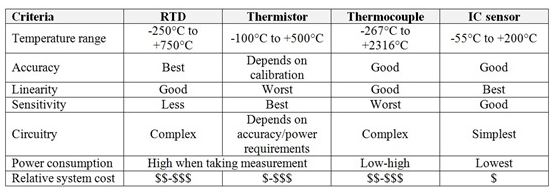
Figure 3: Using the LM35 for thermocouple cold junction compensation
Because thermocouples have very low sensitivity (on the order of tens of microvolts per degree
Celsius), you will need low-offset amplifiers to produce usable output voltages. In the operating
range of the thermocouple, the non-linearity in the temperature-to-voltage transfer function
often requires a compensation circuit or look-up table, as is the RTD and thermocouple. However,
despite these drawbacks, thermocouples are still very popular, especially for ovens, water heaters
, kilns, test equipment and other industrial processes - because of the low thermal mass of the
thermocouple and the operating temperature range Extended to 2300 ℃ or more) is very broad.
IC sensor
The IC sensor operates over a temperature range of -55 ° C to + 150 ° C - several IC sensors are
available for operation up to + 200 ° C. There are various types of integrated IC sensors, but
the four most common integrated IC sensors are analog output devices, digital interface devices,
remote temperature sensors, and integrated IC sensors (temperature switches) with thermostat
functions. Analog output devices (typically voltage outputs, but some also have current outputs)
are the most passive solutions when they require an ADC to digitize the output signal. Digital
Interface Devices Two-wire interfaces (I2C or PMBus) are most commonly used and have a built-in
ADC.
In addition to including a local temperature sensor, the remote temperature sensor also has one or
more inputs to monitor the remote diode temperature - they are most often placed in a highly
integrated digital IC such as a processor or field programmable gate array 】)in. The thermostat
provides a simple alarm when the temperature threshold is reached.
The use of IC sensors offers a number of benefits, including: low power consumption; small package
sizes (some small 0.8mm x 0.8mm); and low device cost for some applications. In addition, since
the IC sensor is calibrated during the production test, no further calibration is necessary. They
are commonly used in fitness track applications, wearable products, computing systems, data
loggers and automotive applications.
Experienced board designers will use the most appropriate solution based on the end product
requirements. Table 1 shows the relative strengths / weaknesses of each temperature sensor.
Table 1: RTD, thermistor, thermocouple and IC sensor relative advantages and disadvantages
Add: No. 16, Road 3, Sanjiang Industry Zone, Shengzhou, Zhejiang, China
Contact:Eric Xie
Email: sale@benoelectric.com
Mob: +861598895936
Skype: ericxie123@outlook.com
Wechat & Whatsapp: +8615988295936
Website:www.benoindustry.com


