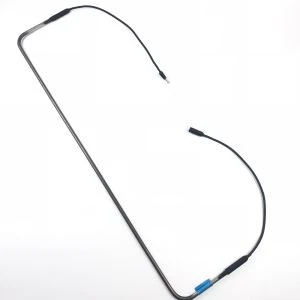
As a supplier of heat makers, I often encounter a common concern from customers: Can a heat maker increase the electricity bill? This is a valid question, especially in an era where energy efficiency and cost - effectiveness are at the forefront of consumers' minds. In this blog, I'll explore the relationship between heat makers and electricity bills, providing a scientific and practical perspective.


How Heat Makers Work
Before delving into the impact on electricity bills, it's essential to understand how heat makers operate. Most heat makers, whether for residential or industrial use, work on the principle of converting electrical energy into heat energy. This is typically achieved through a heating element, which has a high electrical resistance. When an electric current passes through this element, it encounters resistance, and according to Joule's law of heating ((Q = I^{2}Rt), where (Q) is the heat generated, (I) is the current, (R) is the resistance, and (t) is the time), heat is produced.
Factors Affecting Electricity Consumption of Heat Makers
- Power Rating: The power rating of a heat maker, measured in watts (W), is a crucial factor. A higher - wattage heat maker will consume more electricity per unit of time. For example, a 1500 - watt heat maker will draw more power than a 1000 - watt one when both are in operation. If a 1500 - watt heat maker runs for one hour, it will consume 1.5 kilowatt - hours (kWh) of electricity, while a 1000 - watt heat maker will consume 1 kWh in the same period.
- Usage Duration: The length of time the heat maker is used also significantly impacts the electricity bill. Even a low - wattage heat maker can consume a large amount of electricity if it runs continuously for long periods. For instance, a 500 - watt heat maker running for 10 hours a day will consume 5 kWh per day.
- Thermostat Settings: Modern heat makers often come with thermostats. If the thermostat is set at a very high temperature, the heat maker will run more frequently to maintain that temperature, leading to increased electricity consumption. Conversely, setting the thermostat at a more reasonable temperature can reduce energy usage.
- Insulation and Efficiency of the Space: The insulation of the area where the heat maker is used plays a vital role. In a well - insulated room, the heat maker doesn't have to work as hard to maintain the desired temperature, as less heat is lost to the outside. This results in lower electricity consumption compared to an uninsulated or poorly insulated space.
Analyzing the Impact on Electricity Bills
Let's take a practical example to illustrate the impact. Suppose you have a 1500 - watt heat maker and you use it for 4 hours a day. The daily electricity consumption would be (1.5\mathrm{kW}\times4\mathrm{h}=6\mathrm{kWh}). If the cost of electricity is $0.15 per kWh, the daily cost of running the heat maker would be (6\mathrm{kWh}\times$0.15=$0.9). Over a month (assuming 30 days), the cost would be ($0.9\times30 = $27).
However, if you upgrade to a more energy - efficient heat maker with the same heating capacity but a lower power rating, say 1200 watts, and use it for the same 4 hours a day, the daily electricity consumption would be (1.2\mathrm{kW}\times4\mathrm{h}=4.8\mathrm{kWh}). The daily cost would then be (4.8\mathrm{kWh}\times$0.15=$0.72), and the monthly cost would be ($0.72\times30=$21.6). This shows that choosing an energy - efficient heat maker can lead to significant savings on the electricity bill.
Our Heat Maker Products and Energy Efficiency
As a heat maker supplier, we offer a wide range of products designed with energy efficiency in mind. Our HVAC HVACR Heating Heater Parts Components are engineered to provide optimal heating performance while minimizing energy consumption. These components are made with high - quality materials and advanced technology, ensuring that they convert electrical energy into heat energy as efficiently as possible.
Our Industrial Air Finned Heat Tube is another excellent example. The finned design increases the surface area of the heating element, allowing for better heat transfer. This means that the heat tube can achieve the desired heating effect with less power consumption, reducing the overall impact on the electricity bill.
The Straight Tubular Fin Heating Element in our product line is also highly efficient. It is designed to distribute heat evenly, which helps in maintaining a consistent temperature with less frequent cycling of the heating element. This not only improves the comfort level but also saves energy.
Tips for Reducing Electricity Consumption When Using Heat Makers
- Use a Programmable Thermostat: A programmable thermostat allows you to set different temperatures for different times of the day. For example, you can lower the temperature at night when you're sleeping or during the day when you're away from home.
- Proper Maintenance: Regular maintenance of your heat maker, such as cleaning the heating elements and checking for any malfunctions, can ensure that it operates at peak efficiency. A dirty or malfunctioning heat maker may consume more electricity to achieve the same heating effect.
- Supplement with Other Heating Methods: In some cases, you can supplement the heat maker with other heating sources, such as using a fireplace or wearing warmer clothing. This can reduce the reliance on the heat maker and lower electricity consumption.
Conclusion
In conclusion, a heat maker can increase the electricity bill, but the extent of the increase depends on various factors such as power rating, usage duration, thermostat settings, and the insulation of the space. As a heat maker supplier, we are committed to providing products that are not only effective in heating but also energy - efficient. By choosing our products, such as the HVAC HVACR Heating Heater Parts Components, Industrial Air Finned Heat Tube, and Straight Tubular Fin Heating Element, you can enjoy a warm and comfortable environment while keeping your electricity costs in check.
If you're interested in learning more about our heat maker products or are considering a purchase, we encourage you to contact us for a detailed discussion. Our team of experts is ready to assist you in finding the most suitable heat maker for your needs and budget.
References
- Physics textbooks on electrical heating principles
- Energy efficiency reports on heating appliances