Hey there! As an HVACR supplier, I get asked all the time about whether a split - system or a packaged HVACR unit is better. It's a tough question, and there's no one - size - fits - all answer. But don't worry, I'm here to break it down for you so you can make an informed decision.
Let's start with split - system HVACR units. A split - system is exactly what it sounds like: it's split into two main parts. You've got an outdoor unit, which houses the compressor and condenser, and an indoor unit that contains the evaporator coil and the air handler. The two are connected by refrigerant lines, electrical wiring, and a condensate drain.
One of the biggest advantages of a split - system is its flexibility. You can install the indoor unit in different locations depending on your needs. For example, if you have a multi - room building, you can have individual indoor units in each room or area. This allows for zoned heating and cooling, which means you can control the temperature in different parts of your space independently. Say you've got a home office where you want it a bit cooler, and a living room where a slightly warmer temperature is more comfortable. With a split - system, you can set different temperatures for each area, which can save you a lot on energy costs in the long run.
Another plus is the noise level. Since the compressor and the noisier components are outside, the indoor environment is much quieter. You won't have to deal with the constant humming or rattling that can sometimes come from an HVAC unit. This is especially great for bedrooms, libraries, or any place where peace and quiet are important.
However, split - systems do have some drawbacks. Installation can be a bit more complicated and expensive. You need to run refrigerant lines and electrical wiring between the indoor and outdoor units, which might require some professional help. Also, if one of the units breaks down, you might have to deal with two different repair situations. For instance, if the outdoor compressor fails, it could take some time to get it fixed, leaving you without proper heating or cooling in the meantime.
Now, let's talk about packaged HVACR units. A packaged unit combines all the major components – the compressor, condenser, evaporator, and air handler – into a single cabinet. It's usually installed outside, on a rooftop or at ground level.


Packaged units are great for simplicity. Installation is generally quicker and easier compared to split - systems. You don't have to worry about running long refrigerant lines and wiring between different units. This can also make them a more cost - effective option upfront, especially for smaller spaces or buildings where zoning isn't a necessity.
They're also quite durable. Since all the components are in one unit, they're better protected from the elements and potential damage. This means that, with proper maintenance, a packaged unit can last a long time. And if something does go wrong, it's usually easier to access and repair the components since they're all in one place.
But packaged units aren't without their cons. They're not ideal for zoned heating and cooling. Since it's a single unit, it provides the same temperature throughout the entire space. So, if you have different temperature requirements in different areas, you might end up using more energy to keep the whole place at a uniform temperature. Also, because the unit is outside, it can be quite noisy. If it's installed close to living or working areas, the noise can be a nuisance.
When it comes to energy efficiency, both types of units have come a long way. Modern split - systems and packaged units are designed to be more energy - efficient than ever before. However, split - systems tend to have an edge when it comes to zoned control, which can lead to significant energy savings.
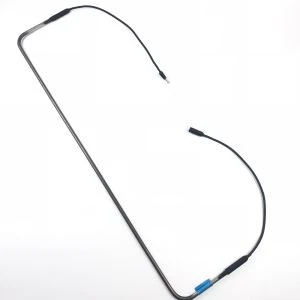
Now, let's talk about some of the parts that are crucial for both split - system and packaged HVACR units. For example, the defrost heater is an important component, especially in refrigeration systems. You can find a Defrost Heater For Refrigerator Part that can help keep your system running smoothly. This heater is used to melt ice that can build up on the evaporator coil, which can improve the efficiency of your unit.
Another important part is the Heater Tube. These tubes are used in the heating process and can play a vital role in the overall performance of your HVACR system. And if you're looking for a more specific type of heater, the Tubular Heater might be just what you need. It's designed to provide efficient and reliable heating.
So, which is better, a split - system or a packaged HVACR unit? Well, it depends on your specific needs. If you need zoned heating and cooling, a quieter indoor environment, and don't mind a more complex installation, a split - system might be the way to go. On the other hand, if you're looking for simplicity, quick installation, and a more cost - effective upfront solution, a packaged unit could be the better choice.
If you're still not sure which option is right for you, or if you're interested in purchasing any of the HVACR parts I mentioned, feel free to reach out. We're here to help you make the best decision for your space and budget. Whether you're a homeowner, a business owner, or a contractor, we've got the expertise and the products to meet your needs. Contact us to start the procurement discussion and let's find the perfect HVACR solution for you.
References
ASHRAE Handbook - HVAC Systems and Equipment. American Society of Heating, Refrigerating and Air - Conditioning Engineers.
Manufacturer specifications for split - system and packaged HVACR units.