Hey there, baking enthusiasts and home cooks! As a supplier of heat plates, I often get asked the question: "Can a heat plate be used for baking?" Well, let's dive right into this topic and find out.
First off, let's understand what a heat plate is. A heat plate is a simple yet versatile kitchen tool. It's basically a flat surface that can generate heat. You've probably seen them in small kitchens, dorm rooms, or even in some professional settings for quick and easy heating. Heat plates come in different sizes, power ratings, and materials, but they all have one thing in common: they can turn electricity or gas into heat.
Now, onto the big question - can you use it for baking? The short answer is yes, but with some limitations.


The Pros of Using a Heat Plate for Baking
One of the biggest advantages of using a heat plate for baking is its portability. Unlike a traditional oven, which is usually a big, stationary appliance, a heat plate can be moved around easily. You can take it outdoors for a little al - fresco baking, or use it in a small space where a full - sized oven won't fit.
Another plus is cost - effectiveness. Heat plates are generally much cheaper than ovens. If you're on a tight budget and still want to do some basic baking, a heat plate can be a great option. You don't have to invest a large amount of money in a fancy oven when you can get a heat plate for a fraction of the cost.
Heat plates also heat up quickly. You don't have to wait for 10 - 15 minutes like you do with an oven. This means you can start baking your favorite cookies or muffins in no time.
The Cons of Using a Heat Plate for Baking
However, there are some significant drawbacks. The most obvious one is the lack of temperature control. Ovens usually have precise temperature settings, allowing you to bake at the exact temperature required for a particular recipe. Heat plates, on the other hand, often have limited temperature control. You might end up with over - baked or under - baked goods because you can't accurately set the temperature.
The heat distribution on a heat plate is also not as even as in an oven. In an oven, the hot air circulates around the food, ensuring that it bakes evenly on all sides. With a heat plate, the heat is concentrated in one area, which can lead to uneven baking. For example, the edges of your cake might be burnt while the center is still raw.
The size of the heat plate is another limitation. Most heat plates are relatively small, so you can't bake large items like a whole cake or a big loaf of bread. You'll be restricted to making smaller batches of baked goods.
Tips for Baking with a Heat Plate
If you still want to give baking with a heat plate a try, here are some tips to help you out.
First, choose the right type of baking pan. A dark - colored, heavy - duty pan can absorb and distribute heat better on a heat plate. Avoid using thin, lightweight pans as they might not conduct heat evenly.
You can also use a double - boiler method. Place a smaller pan with your baking mixture inside a larger pan filled with water on the heat plate. This helps to moderate the heat and prevent over - baking.
Keep an eye on your baked goods at all times. Since the heat plate doesn't have a built - in timer or precise temperature control, you need to be vigilant. Check on your cookies or muffins regularly to make sure they're baking properly.
Our Heat Plate Products
As a heat plate supplier, we offer a wide range of heat plates that are suitable for different needs. Our heat plates are made from high - quality materials, ensuring durability and efficient heat generation.
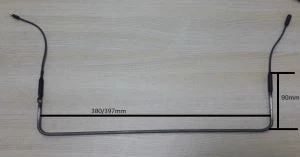
We also understand the importance of having reliable heating elements. That's why we recommend our Grill Resistance Oven Resistance Heating Element. This heating element is designed to provide consistent heat, which is crucial for baking.
Our Good Quality Stainless Steel Oven Heating Element is another great option. It's made of stainless steel, which is resistant to corrosion and can withstand high temperatures.
And if you're looking for a more general - purpose heating element, our Oven Resistance Heating Element is a solid choice. It's compatible with most of our heat plates and can help you achieve better baking results.
Conclusion
So, can a heat plate be used for baking? Yes, it can, but it's not a perfect substitute for a traditional oven. It has its pros and cons, and with the right techniques, you can still make some delicious baked goods on a heat plate.
If you're interested in our heat plates or heating elements, we'd love to hear from you. Whether you're a home cook looking for a budget - friendly baking solution or a business in need of reliable heating equipment, we're here to help. Feel free to reach out to us for more information and to start a procurement discussion.
References
- "The Science of Baking" by Peter Reinhart
- "Kitchen Equipment Basics" by Linda Stradley