The entrainment limit is a crucial factor that significantly influences the performance of heatpipes. As a heatpipe supplier, understanding how this limit impacts heatpipe performance is essential for providing high - quality products and meeting the diverse needs of our customers.
Understanding the Entrainment Limit
The entrainment limit in a heatpipe occurs when the vapor flow velocity inside the heatpipe becomes so high that it starts to entrain the liquid working fluid droplets. In a heatpipe, the working fluid undergoes a phase - change cycle. Heat is applied at the evaporator section, causing the liquid working fluid to vaporize. The vapor then travels to the condenser section, where it releases heat and condenses back into a liquid. The condensed liquid then returns to the evaporator through a wick structure or by gravity, depending on the type of heatpipe.
When the vapor velocity increases, it can exert a drag force on the liquid droplets in the wick or in the return path. If this drag force exceeds the surface tension and capillary forces that hold the liquid in place, the liquid droplets will be carried away by the vapor flow. This phenomenon is known as entrainment.
Impact on Heat Transfer Capacity
One of the most significant ways the entrainment limit affects heatpipe performance is by reducing the heat transfer capacity. The heat transfer in a heatpipe is directly related to the amount of working fluid that can complete the phase - change cycle. When entrainment occurs, the liquid return to the evaporator is disrupted. As a result, there is less liquid available at the evaporator to absorb heat and vaporize.
This leads to a decrease in the rate of vapor generation. Since the heat transfer in a heatpipe is mainly due to the latent heat of vaporization and condensation of the working fluid, a reduction in vapor generation means a lower heat transfer rate. For example, in an electronic cooling application, if a heatpipe reaches its entrainment limit, it may not be able to dissipate the heat generated by the electronic components effectively. This can lead to overheating, which can damage the components and reduce their lifespan.
Effect on Temperature Distribution
The entrainment limit also has an impact on the temperature distribution along the heatpipe. In a properly functioning heatpipe, the temperature difference between the evaporator and the condenser is relatively small, ensuring efficient heat transfer. However, when entrainment occurs, the uneven distribution of the working fluid can cause hot spots to develop.
At the evaporator, if there is not enough liquid to absorb the heat, the temperature at the evaporator will increase. On the other hand, at the condenser, the excess liquid carried by the vapor may cause local cooling in some areas, while other areas may not receive enough vapor for condensation. This uneven temperature distribution can reduce the overall efficiency of the heatpipe and may also lead to mechanical stress on the heatpipe structure, especially in applications where the heatpipe is part of a larger system.
Influence on Heatpipe Lifespan
Entrainment can have a negative impact on the lifespan of a heatpipe. The entrained liquid droplets can cause erosion of the heatpipe walls and the wick structure. Over time, this erosion can damage the wick, reducing its ability to transport the liquid back to the evaporator. Additionally, the uneven temperature distribution caused by entrainment can lead to thermal expansion and contraction of the heatpipe materials, which can cause fatigue and eventually lead to failure.
For example, in a long - term industrial application, a heatpipe that frequently operates near its entrainment limit may experience premature failure, requiring more frequent replacements. This not only increases the maintenance cost but also disrupts the normal operation of the system.
Mitigating the Entrainment Limit
As a heatpipe supplier, we take several measures to mitigate the impact of the entrainment limit on heatpipe performance. One approach is to optimize the design of the heatpipe. This includes choosing the appropriate wick structure and working fluid. A well - designed wick can provide a higher capillary force to resist the entrainment of the liquid by the vapor.
We also carefully select the working fluid based on its physical properties, such as surface tension and viscosity. A working fluid with a high surface tension is more resistant to entrainment. Additionally, we can adjust the dimensions of the heatpipe, such as the diameter and length, to control the vapor velocity and reduce the risk of entrainment.
Applications and the Entrainment Limit
In different applications, the entrainment limit can have varying degrees of impact. For instance, in aerospace applications, heatpipes are used to dissipate heat from electronic components in a weight - sensitive environment. Here, the entrainment limit needs to be carefully considered to ensure reliable operation. Any reduction in heat transfer capacity due to entrainment can lead to critical system failures.
In the automotive industry, heatpipes are used for engine cooling and battery thermal management. The high - temperature and high - vibration environment in vehicles can increase the risk of entrainment. Therefore, our heatpipes are designed to withstand these harsh conditions and minimize the impact of the entrainment limit.


Our Product Offerings
As a heatpipe supplier, we offer a wide range of heatpipes to meet different customer requirements. Our products are designed with the entrainment limit in mind, ensuring high - performance and long - lasting operation. We also provide customized heatpipe solutions based on specific application needs.
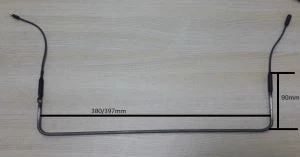
If you are interested in our heatpipes, you may also be interested in some of our related products. For example, we offer Stainless Steel 304 Material Defrost Heater For Air Cooler, which is a reliable heating solution for air coolers. You can also Buy Electric Heater Heating Heat Tube Tubes Heatpipe Element from us, which is suitable for various heating applications. And our Electric Defrost Heater provides efficient defrosting capabilities.
Contact Us for Procurement
We invite you to contact us for any procurement needs. Whether you are looking for standard heatpipes or customized solutions, our team of experts is ready to assist you. We can provide detailed technical information, product samples, and competitive pricing. Let's start a discussion to find the best heatpipe solution for your application.
References
- Faghri, A. (1995). Heat Pipe Science and Technology. Taylor & Francis.
- Kakaç, S., & Pramuanjaroenkij, A. (2005). Heat Pipes: Design and Technology. Taylor & Francis.
- Chi, S. W. (1976). Heat Pipe Theory and Practice: A Source Book. Hemisphere Publishing Corporation.