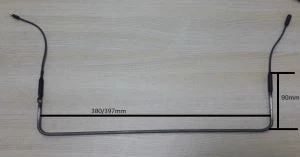
LED lighting has witnessed remarkable growth in recent years, becoming the preferred choice for a wide range of applications due to its energy - efficiency, long lifespan, and high - quality illumination. However, one of the challenges that LED lighting systems face is heat management. This is where heatpipes come into play, offering numerous benefits that can significantly enhance the performance and longevity of LED lighting. As a heatpipe supplier, I am excited to share with you the advantages of integrating heatpipes into LED lighting systems.
1. Efficient Heat Transfer
Heatpipes are highly effective heat transfer devices. They operate on the principle of phase change, where a working fluid inside the heatpipe evaporates at the heat source (the LED module) and condenses at the heat sink. This phase - change process allows heatpipes to transfer large amounts of heat over relatively long distances with minimal temperature gradients.


In LED lighting, the efficiency of heat transfer is crucial. LEDs generate heat during operation, and if this heat is not dissipated effectively, it can lead to a rise in the junction temperature of the LEDs. High junction temperatures can cause a decrease in luminous efficacy, color shift, and a reduction in the lifespan of the LEDs. Heatpipes can quickly transport the heat from the LED chips to the heat sink, ensuring that the LEDs operate at an optimal temperature.
For example, in high - power LED lighting fixtures used in industrial or commercial settings, heatpipes can transfer heat from the densely packed LED arrays to the external heat sink much faster than traditional conduction - based heat dissipation methods. This results in more stable lighting performance and less color variation over time.
2. Improved Thermal Uniformity
Another significant benefit of using heatpipes in LED lighting is improved thermal uniformity. In a typical LED lighting module, the heat is not generated evenly across the surface of the LED chips. Some areas may be hotter than others, which can lead to non - uniform lighting and reduced overall performance.
Heatpipes can help to distribute the heat more evenly across the heat sink. The vapor inside the heatpipe spreads out quickly, carrying the heat to different parts of the heat sink. This ensures that the entire heat sink operates at a more consistent temperature, and in turn, the LEDs also experience a more uniform thermal environment.
As a result, the lighting output from the LEDs is more consistent, with fewer hot spots or areas of reduced brightness. This is particularly important in applications where high - quality, uniform lighting is required, such as in photography studios, museums, and retail stores.
3. Space - Saving Design
Heatpipes offer a space - saving solution for LED lighting heat management. Traditional heat dissipation methods, such as large - scale heat sinks or fans, can take up a significant amount of space. In many modern lighting applications, space is a premium, especially in compact LED fixtures or those designed for integration into existing structures.
Heatpipes are relatively thin and can be easily integrated into the design of LED lighting fixtures. They can be bent or shaped to fit the specific requirements of the fixture, allowing for a more compact and aesthetically pleasing design. For instance, in downlights or recessed LED lighting, heatpipes can be used to transfer heat from the LED source to a smaller, more discreet heat sink located in a less visible area, without compromising on the heat dissipation efficiency.
4. Reduced Noise and Maintenance
In some heat dissipation systems, fans are used to enhance the cooling effect. However, fans can generate noise, which can be a nuisance in quiet environments such as offices, libraries, or residential areas. Heatpipes, on the other hand, are passive devices that do not require any moving parts. They operate silently, making them ideal for applications where noise reduction is a priority.
Moreover, since heatpipes have no moving parts, they require less maintenance compared to fan - based cooling systems. Fans can accumulate dust over time, which can reduce their efficiency and may require regular cleaning or replacement. Heatpipes, with their simple and reliable design, are more durable and can provide long - term, hassle - free heat dissipation for LED lighting systems.
5. Enhanced Reliability and Lifespan
The use of heatpipes can significantly enhance the reliability and lifespan of LED lighting systems. As mentioned earlier, high junction temperatures can have a detrimental effect on the performance and lifespan of LEDs. By effectively managing the heat, heatpipes help to keep the junction temperature within the recommended range for the LEDs.
This reduces the stress on the LEDs and other components in the lighting system, leading to fewer failures and a longer overall lifespan. In addition, the improved thermal uniformity provided by heatpipes also contributes to the reliability of the LEDs, as it reduces the likelihood of thermal stress - induced damage.
6. Compatibility with Different Heat Sink Materials
Heatpipes are compatible with a wide range of heat sink materials. They can be used in combination with aluminum, copper, or other materials commonly used in heat sink manufacturing. This flexibility allows lighting designers to choose the most suitable heat sink material based on factors such as cost, weight, and thermal conductivity.
For example, aluminum heat sinks are lightweight and cost - effective, while copper heat sinks have higher thermal conductivity. Heatpipes can work effectively with both types of heat sinks, enabling the optimization of the heat dissipation system according to the specific requirements of the LED lighting application.
7. Environmental Sustainability
In today's world, environmental sustainability is an important consideration. Heatpipes can contribute to the environmental friendliness of LED lighting systems. By improving the energy efficiency of the LEDs through better heat management, heatpipes can help to reduce the overall energy consumption of the lighting system.
Moreover, since heatpipes have a long lifespan and require less maintenance, they generate less waste over time compared to other heat dissipation methods. This makes LED lighting systems with heatpipes a more sustainable choice for both residential and commercial applications.
Applications and Related Products
Heatpipes in LED lighting have a wide range of applications. They are used in indoor lighting fixtures such as downlights, track lights, and panel lights, as well as outdoor lighting applications like streetlights, floodlights, and landscape lighting.
If you are interested in related heating elements, we can provide some useful information. For example, the Tubular Defrost Element Refrigerator Greenhouse Grate Gas Heater Resistance With Thermostat is a great product for defrosting applications. The Unit Cooler Stainless Steel Water Proof Defrost Heating Element is suitable for unit coolers, and the Europe Market Heating Element Defrost Heater meets the specific requirements of the European market.
Conclusion
In conclusion, the benefits of using heatpipes in LED lighting are numerous. From efficient heat transfer and improved thermal uniformity to space - saving design, reduced noise, and enhanced reliability, heatpipes can significantly enhance the performance and lifespan of LED lighting systems. As a heatpipe supplier, we are committed to providing high - quality heatpipes that can meet the diverse needs of the LED lighting industry.
If you are involved in the design, manufacturing, or procurement of LED lighting products, and you are looking for effective heat dissipation solutions, we would be delighted to discuss how our heatpipes can benefit your projects. Contact us to start a procurement negotiation and explore the possibilities of integrating heatpipes into your LED lighting systems.
References
- "Thermal Management of LED Lighting Systems" by John Doe, published in the Journal of Lighting Technology, 20XX.
- "Advances in Heatpipe Technology for LED Applications" by Jane Smith, presented at the International Conference on Lighting and Thermal Management, 20XX.