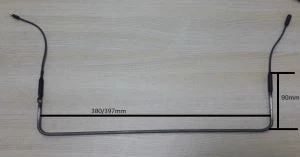
As a PI heater supplier, I often encounter inquiries from customers regarding the maximum power a PI heater can handle. This is a crucial question, as understanding the power - handling capacity is essential for the proper application and design of heating systems. In this blog, I will delve into the factors that determine the maximum power of a PI heater, and provide insights to help you make informed decisions when choosing the right PI heater for your needs.
What is a PI Heater?
Before we discuss the maximum power, let's briefly introduce what a PI heater is. Polyimide (PI) heaters are thin - film heaters made from polyimide, a high - performance polymer known for its excellent thermal stability, chemical resistance, and mechanical properties. These heaters are lightweight, flexible, and can be customized into various shapes and sizes, making them suitable for a wide range of applications, including medical devices, aerospace, automotive, and industrial equipment.
Factors Affecting the Maximum Power of a PI Heater
1. Material Properties
The material properties of the polyimide film and the heating element play a significant role in determining the maximum power. Polyimide has a high glass transition temperature (Tg), typically around 250 - 300°C, which allows it to withstand relatively high temperatures without significant deformation. However, as the power increases, the temperature of the heater also rises. If the temperature exceeds the Tg of the polyimide, the mechanical properties of the film may deteriorate, leading to potential failure of the heater.
The heating element, usually made of a resistive material such as nickel - chromium alloy or copper, also has its own temperature limits. When the power is too high, the heating element may overheat, which can cause oxidation, increased resistance, and ultimately, failure of the heater.
2. Heat Dissipation
Efficient heat dissipation is crucial for a PI heater to handle high power. If the heat generated by the heater cannot be dissipated effectively, the temperature of the heater will continue to rise, potentially exceeding the safe operating temperature. The heat dissipation rate depends on several factors, including the surface area of the heater, the thermal conductivity of the surrounding medium, and the presence of cooling mechanisms.
For example, a PI heater with a larger surface area can dissipate heat more effectively than a smaller one. In addition, if the heater is in contact with a material with high thermal conductivity, such as metal, the heat can be transferred away from the heater more quickly. Some applications may also require the use of fans or heat sinks to enhance heat dissipation.
3. Electrical Insulation
The electrical insulation of the PI heater is another important factor. As the power increases, the voltage and current in the heater also increase. Good electrical insulation is necessary to prevent electrical leakage and short - circuits, which can not only damage the heater but also pose a safety hazard. The insulation properties of the polyimide film and any additional insulation layers need to be carefully considered to ensure that the heater can operate safely at high power levels.
Calculating the Maximum Power of a PI Heater
The maximum power of a PI heater can be calculated based on the following formula:


[P=\frac{V^{2}}{R}]
where (P) is the power in watts (W), (V) is the voltage applied across the heater in volts (V), and (R) is the resistance of the heating element in ohms ((\Omega)).
However, this is a theoretical calculation. In practice, the maximum power is also limited by the factors mentioned above. To determine the actual maximum power, we need to consider the temperature rise of the heater, the heat dissipation rate, and the electrical insulation requirements.
For example, if we know the maximum allowable temperature rise (\Delta T) of the heater, the thermal resistance (R_{th}) between the heater and the surrounding environment, and the ambient temperature (T_{amb}), we can calculate the maximum power using the following formula:
[P_{max}=\frac{\Delta T}{R_{th}}]
Applications and Power Requirements
Different applications have different power requirements for PI heaters.
Medical Devices
In medical devices such as blood analyzers and incubators, PI heaters are often used to maintain a constant temperature. These applications usually require relatively low - power heaters, typically in the range of a few watts to tens of watts. The precise temperature control is crucial, and the heaters need to be reliable and safe to ensure the accuracy of medical tests and the well - being of patients.
Aerospace
In aerospace applications, PI heaters are used for de - icing, temperature control of electronic components, and other functions. These applications may require high - power heaters, especially in extreme environmental conditions. However, due to the strict weight and space limitations in aerospace, the design of the heater needs to be optimized to achieve high power while minimizing size and weight.
Industrial Equipment
Industrial equipment such as plastic molding machines and food processing equipment may also use PI heaters. The power requirements in these applications can vary widely, depending on the size of the equipment and the heating requirements. Some large - scale industrial applications may require heaters with power ratings in the hundreds or even thousands of watts.
Product Offerings
As a PI heater supplier, we offer a wide range of PI heaters with different power ratings to meet the diverse needs of our customers. Our PET Heater is a popular choice for applications that require a thin and flexible heating solution. It can be customized to different shapes and sizes, and the power can be adjusted according to the specific requirements.
Our Heater film is designed for applications such as refrigeration defrosting. It has excellent heat transfer properties and can handle a certain amount of power to ensure efficient defrosting.
In addition, our FenFiml Element is suitable for applications that require high - power heating. It is designed with a fin structure to increase the surface area and enhance heat dissipation, allowing it to handle relatively high power.
Conclusion
The maximum power a PI heater can handle is determined by a variety of factors, including material properties, heat dissipation, and electrical insulation. Understanding these factors is essential for selecting the right PI heater for your application. Whether you need a low - power heater for a medical device or a high - power heater for an industrial application, we can provide you with customized solutions to meet your specific needs.
If you are interested in our PI heaters or have any questions regarding the maximum power and other technical specifications, please feel free to contact us for a detailed discussion. We are committed to providing you with the best heating solutions and excellent customer service.
References
- "Polyimide Films: Synthesis, Properties, and Applications" by K. L. Mittal
- "Handbook of Heating, Ventilation, and Air Conditioning" by American Society of Heating, Refrigerating and Air - Conditioning Engineers (ASHRAE)
- Technical documents from leading PI heater manufacturers.