


Solar energy is one of the most promising renewable energy sources, and solar collectors play a crucial role in harnessing this energy. Among various types of solar collectors, those equipped with heat tubes are highly efficient and widely used. As a heat tube supplier, I'm excited to share with you how heat tubes work in solar collectors.
Basic Structure of Heat Tubes in Solar Collectors
Heat tubes, also known as heat pipes, are at the heart of many high - performance solar collectors. A typical heat tube consists of a sealed tube, usually made of copper or aluminum due to their excellent thermal conductivity. Inside the tube, there is a small amount of working fluid, such as water, ammonia, or methanol. The inner wall of the tube is lined with a wick structure.

The wick structure can be made of various materials, like sintered metal powder, wire mesh, or grooved channels. Its main function is to provide capillary action, which helps the working fluid to flow back to the evaporator section of the heat tube.
The Working Principle of Heat Tubes
The operation of heat tubes in solar collectors can be divided into three main stages: evaporation, transport, and condensation.
Evaporation Stage
When solar radiation hits the solar collector, the absorber plate of the collector absorbs the heat. The heat tube is in contact with the absorber plate. As the absorber plate heats up, it transfers the heat to the working fluid inside the heat tube at the evaporator section (usually the bottom part of the tube in a vertical - oriented heat tube in a solar collector).
The working fluid has a relatively low boiling point. When it receives enough heat from the absorber plate, it starts to evaporate. During evaporation, the working fluid changes from a liquid state to a vapor state, absorbing a large amount of latent heat in the process. This latent heat absorption is a key feature that allows heat tubes to transfer a significant amount of heat with a relatively small temperature difference.
Transport Stage
Once the working fluid evaporates, the vapor is at a higher pressure than the cooler parts of the heat tube. Due to this pressure difference, the vapor rapidly moves towards the condenser section of the heat tube. The condenser section is usually connected to a heat exchanger, which is in contact with the fluid (such as water) that needs to be heated.
The wick structure in the heat tube is designed in such a way that it does not impede the movement of the vapor. The vapor, being in a gaseous state, can flow quickly through the tube, carrying the absorbed heat from the evaporator to the condenser.
Condensation Stage
In the condenser section, the vapor releases its latent heat to the fluid in the heat exchanger. As it loses heat, the vapor condenses back into a liquid state. This condensed liquid then returns to the evaporator section of the heat tube through the capillary action provided by the wick structure.
The capillary action occurs because the liquid in the wick structure forms a meniscus at the pores or grooves of the wick. The surface tension of the liquid causes it to move along the wick, overcoming the force of gravity and any other resistance in the tube. This continuous cycle of evaporation, transport, and condensation allows the heat tube to efficiently transfer heat from the solar - heated absorber plate to the fluid in the heat exchanger.
Advantages of Heat Tubes in Solar Collectors
High Efficiency
Heat tubes can transfer heat with very high efficiency. They have a much higher thermal conductivity than solid metal rods of the same size. This is because the latent heat transfer during evaporation and condensation is a very effective way of moving heat. As a result, solar collectors with heat tubes can heat the working fluid (such as water for domestic hot water systems) more quickly and to a higher temperature compared to other types of solar collectors.
Low - Temperature Performance
Heat tubes can operate efficiently even in relatively low - temperature conditions. The capillary action in the wick structure allows the working fluid to circulate regardless of the orientation of the heat tube and the influence of gravity to a certain extent. This means that solar collectors with heat tubes can continue to function on cloudy days or in colder climates.
Freeze - Resistance
Since the working fluid inside the heat tube is isolated from the external environment and is usually protected from freezing, solar collectors with heat tubes are less likely to be damaged by freezing temperatures. This is an important advantage, especially in regions with cold winters.
Applications of Heat Tubes in Solar Collectors
Domestic Hot Water Systems
One of the most common applications of solar collectors with heat tubes is in domestic hot water systems. The heat transferred from the solar collector to the water in the heat exchanger can be used for showering, washing dishes, and other household hot water needs. This can significantly reduce the energy consumption of a household and lower the utility bills.
Space Heating
Solar collectors with heat tubes can also be used for space heating in buildings. The heated water from the solar collector can be circulated through radiators or under - floor heating systems to warm up the interior space of a building. This is an environmentally friendly and cost - effective way of heating, especially in areas with abundant sunlight.
Our Product Offerings
As a heat tube supplier, we offer a wide range of high - quality heat tubes for solar collectors. Our heat tubes are designed with advanced technology and high - quality materials to ensure maximum efficiency and durability.
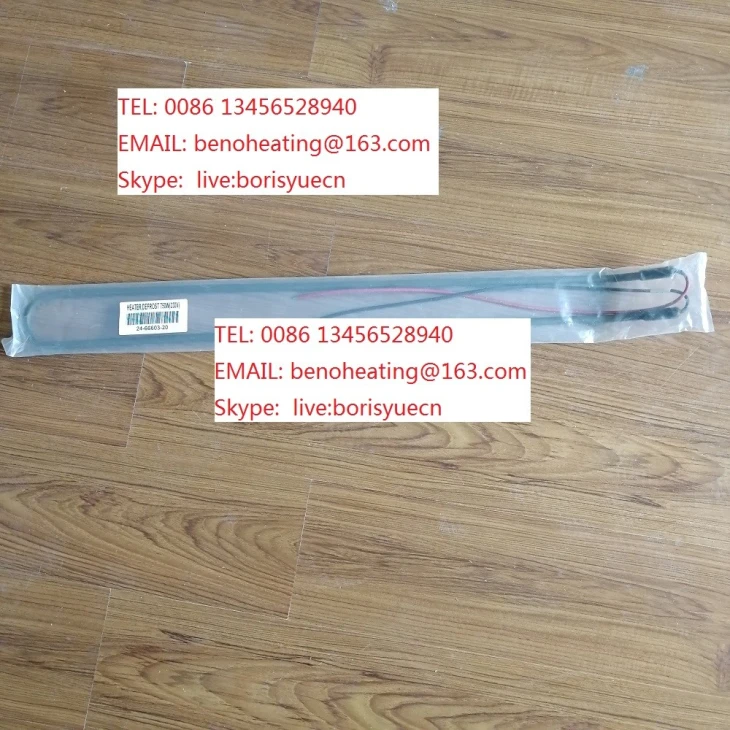
In addition to heat tubes for solar collectors, we also supply other heating elements. For example, you can check out our Defrost Heater Defrost Resistance For Refrigerator, Defrost Heater For Refrigerated Container, and Double Tubular Defrost Heater For Air Cooler. These products are designed to meet the specific needs of different industries and applications.
Why Choose Our Heat Tubes
Quality Assurance
We have a strict quality control system in place. Our heat tubes are tested rigorously before leaving the factory to ensure that they meet the highest standards of performance and reliability. We use high - quality materials and advanced manufacturing processes to produce heat tubes that can withstand various environmental conditions.
Technical Support
Our team of technical experts is always ready to provide you with professional advice and support. Whether you have questions about the installation, operation, or maintenance of our heat tubes, we can offer you the right solutions.
Customization
We understand that different customers may have different requirements. Therefore, we offer customization services. We can design and manufacture heat tubes according to your specific needs, such as size, shape, and working fluid.
Contact Us for Procurement
If you are interested in our heat tubes or other heating products, we welcome you to contact us for procurement and further discussions. We believe that our high - quality products and excellent services will meet your needs and help you achieve your goals in solar energy utilization or other heating applications.
References
- Incropera, Frank P., et al. Fundamentals of Heat and Mass Transfer. Wiley, 2017.
- Duffie, John A., and William A. Beckman. Solar Engineering of Thermal Processes. Wiley, 2013.


